
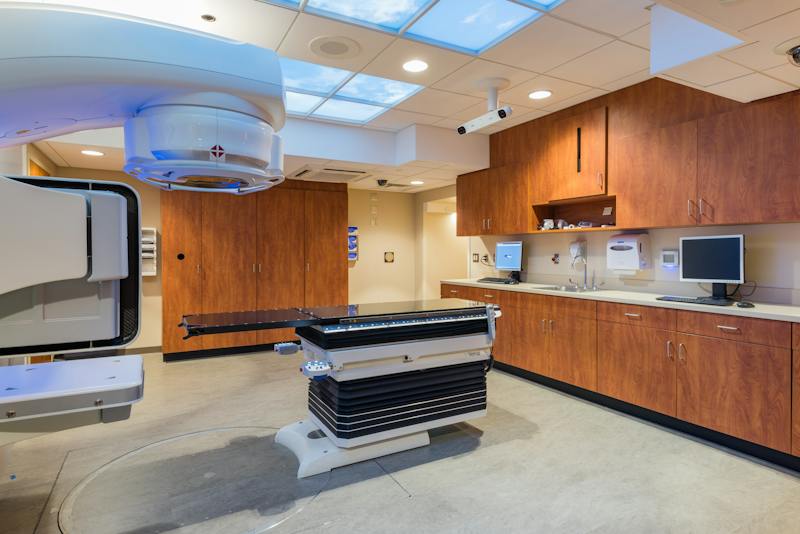
Every hospital expansion carries a hidden cost: the noise, vibration, and dust that reach patients and sensitive equipment long before the new space opens. Modular construction reduces that disturbance by moving the heaviest work off campus. At RAD Technology Medical Systems, roughly 80% of each Modular Medical Facility (MMF) is built in a controlled factory while foundation and utility work proceed on-site at the same time. For more than 20 years, RAD has helped hospitals and cancer centers grow while patient care continues next door. Here's why a quieter build matters and how it works.
What Makes Hospital Construction So Disruptive?
Traditional construction disrupts active campuses because the loudest and messiest phases happen steps away from patients. Those phases often last months, and sometimes years. Common sources of disturbance include:
- Excavation and pile driving, which send vibration through the ground and into nearby buildings
- Large concrete pours, which bring concrete trucks, pumps, and extended work hours
- Steel erection and framing, which involve cranes, impact tools, and constant deliveries
- Interior finish work, which generates dust from drywall, ceiling tiles, and cutting
- Weather delays, which stretch each of these phases further
Taken one at a time, these phases seem manageable. Combined over a long timeline, they shape how patients and staff experience the entire campus.
Construction Noise and Patient Sleep
Patients need quiet to heal, and most hospitals already struggle to provide it. According to a commentary in the Journal of Hospital Medicine, World Health Organization guidelines call for ward background noise to average below 35 dB during the day and below 30 dB at night. The same authors note that few, if any, hospitals meet those recommendations, even without a job site outside.
Poor sleep isn't only a comfort issue. The authors link fragmented sleep to delirium risk, longer stays, uncontrolled pain, and lower patient satisfaction. Adding months of jackhammers and backup alarms to that environment makes a difficult problem harder.
Why Vibration-Sensitive Equipment Needs a Calmer Job Site
MRI scanners, surgical microscopes, and other precision equipment depend on stable surroundings to perform as intended. Ground-borne vibration from excavation, compaction, and heavy equipment can travel farther than many people expect. Image quality and fine motor work may both suffer.
Hospitals often respond by rescheduling procedures, relocating services, or monitoring vibration throughout a project. Each response protects patients, yet each also costs time and capacity. Shortening the period of heavy on-site activity reduces how often those trade-offs come up.
Where Construction Dust Fits Into the Picture
Dust is the quietest disruption, and it can be the most serious. The CDC explains that construction can send soil-borne fungi such as Aspergillus into the air and inside healthcare facilities. A review in Clinical Infectious Diseases found construction-related fungal outbreaks most often affect immunocompromised patients, including people with blood cancers. Those are the same patients many cancer centers serve.
Moving the Loudest Work Off Campus
Modular construction quiets a campus by relocating most fabrication to a factory. RAD's process works in parallel:
- Modules are built, finished, and inspected in a factory environment.
- Foundation and utility work happen on-site at the same time.
- Completed modules arrive and are set in place over a short window.
RAD's radiotherapy facilities take this a step further. Instead of forming and pouring thick monolithic concrete walls, the RAD Vault uses proprietary granular shielding that is self-healing and works in fluid communication. The result is fewer pours, fewer trucks, and less time with crews on campus.
Adventist Health Glendale saw the difference firsthand. Its RAD Temp was in place in four days. As Dennis Quagliani, Director of Cancer Services, put it: "It was important for us to have this temporary facility available while we worked on upgrading the cancer center so we did not have to stop or hinder patient care."
Quieter Campus Growth Starts With a Conversation With RAD
Growing your campus shouldn't come at the expense of patient rest, imaging quality, or infection control. RAD Technology Medical Systems brings two decades of experience in Modular Medical Facilities to every project, from single RAD Vaults to complete cancer centers. Contact RAD or call 305.898.2544 to find the right solution for your medical build.