
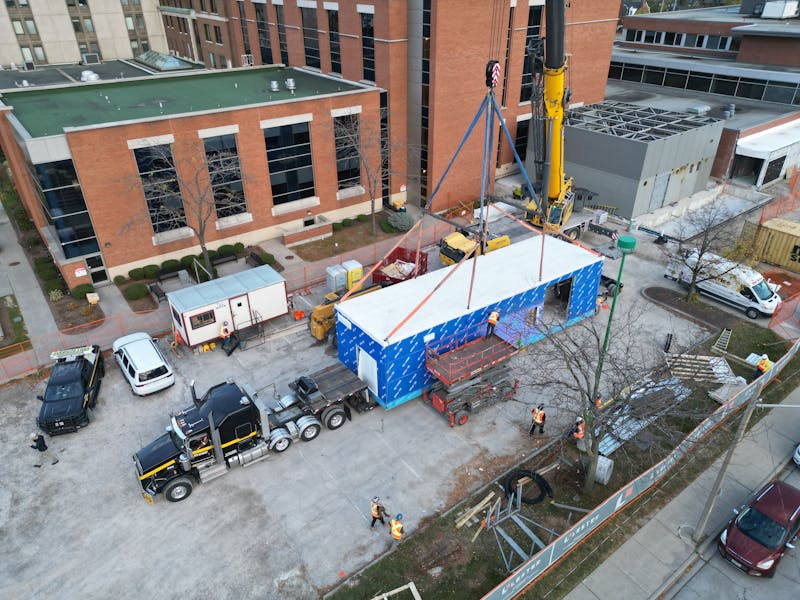
How Modular Construction Supports Predictable Capital Deployment
Modular construction supports predictable capital deployment by replacing the unpredictable variables of traditional building, weather, labor, change orders, and multi-year timelines with a controlled fabrication process and flexible financing structures that hospital systems can plan around.
RAD Technology Medical Systems has helped hospitals deploy capital with that predictability for decades, delivering Modular Medical Facilities (MMF) at institutions. Our technology and operating lease options give healthcare leaders the cost certainty and revenue acceleration that traditional construction rarely matches.
In this blog, we will discuss the challenges of healthcare capital deployment, how modular construction reduces financial risk, and the financing models that give hospital systems strategic flexibility.
The Capital Deployment Challenge in Healthcare Construction
Healthcare capital projects are notoriously difficult to forecast. Traditional construction can stretch budgets, timelines, and patience well past initial projections, often by years. The American Hospital Association reports that hospitals are managing tighter operating margins and growing capital needs simultaneously, leaving little room for budget surprises or delayed revenue. Forecasting accuracy has become a strategic priority for hospital CFOs.
Common capital deployment risks include:
- Schedule overruns: Weather, labor shortages, and supply chain delays push timelines.
- Change orders: Field conditions and design revisions inflate final project costs.
- Capital lock-up: Committed funds sit idle until the facility opens for patients.
- Delayed revenue: Every month without operations is a month without patient care income.
How Modular Compresses the Timeline from Capital to Revenue
Time matters in healthcare capital deployment because each month of delay compounds project costs. Modular construction shortens the gap between capital commitment and clinical operation by running fabrication and site preparation in parallel.
The capital-to-revenue advantages include:
- Parallel scheduling: Module fabrication overlaps with site work to compress timelines.
- Predictable completion dates: Factory conditions reduce schedule volatility.
- Faster revenue generation: Operational facilities begin billing for services sooner.
- Reduced carrying costs: Less project time means less interest and overhead exposure.
Operating Lease Models and Off-Balance-Sheet Flexibility
Capital procurement is one of the slowest steps in any hospital project. RAD's operating lease model bypasses that bottleneck, letting hospitals deploy a fully operational facility without committing major capital expenditure upfront. The U.S. Government Accountability Office has documented how alternative financing structures help large institutional projects move faster while preserving fiscal capacity.
Operating lease benefits include:
- Reduced upfront capital: Hospitals open facilities with minimal cash outlay.
- Preserved balance sheet: Capital stays available for clinical and technology investment.
- Predictable monthly costs: Lease payments simplify long-term financial planning.
- Term flexibility: Lease structures align with strategic and clinical timelines.
Cost Predictability Through Factory Fabrication
Modular construction shifts the bulk of the work from a variable job site to a controlled factory environment. Factory conditions deliver tighter cost control, fewer change orders, and continuous quality inspection. The Whole Building Design Guide notes that off-site construction methods consistently produce more reliable cost outcomes than traditional builds, particularly for complex healthcare facilities with strict regulatory requirements.
Cost predictability comes from:
- Controlled environments: Weather and field variables disappear from the schedule.
- Standardized processes: Repeatable assembly tightens labor and material costs.
- Continuous inspection: Inspectors catch and correct quality issues during assembly.
- Lower contingency needs: Reduced risk shrinks the financial reserves projects must carry.
Aligning Capital Strategy with Clinical Priorities
Capital deployment decisions are not just financial — they are strategic moves that determine which service lines grow, which facilities expand, and which patient populations gain access to care. Modular construction lets hospitals act on those strategies faster, with less risk and more flexibility for course corrections. The Agency for Healthcare Research and Quality tracks how facility planning influences both clinical access and population health outcomes.
Strategic alignment includes:
- Service line expansion: Hospitals add oncology, imaging, or emergency capacity quickly.
- Phased growth: Modular construction allows incremental expansion as demand rises.
- Geographic flexibility: Hospitals can deploy facilities where access gaps are greatest.
- Risk-managed investment: Smaller, faster projects test demand before larger commitments.
Predictable Capital Deployment, Backed by Decades of Healthcare Project Experience
Predictable capital deployment is one of the most valuable benefits modular construction brings to healthcare leadership. RAD has delivered that predictability across hundreds of projects at institutions.
We work alongside your finance and facilities teams from concept through commissioning. Ready to deploy capital with the predictability your strategic plan requires? Contact RAD Technology Medical Systems today to schedule a consultation with one of our modular experts and start planning your facility.