
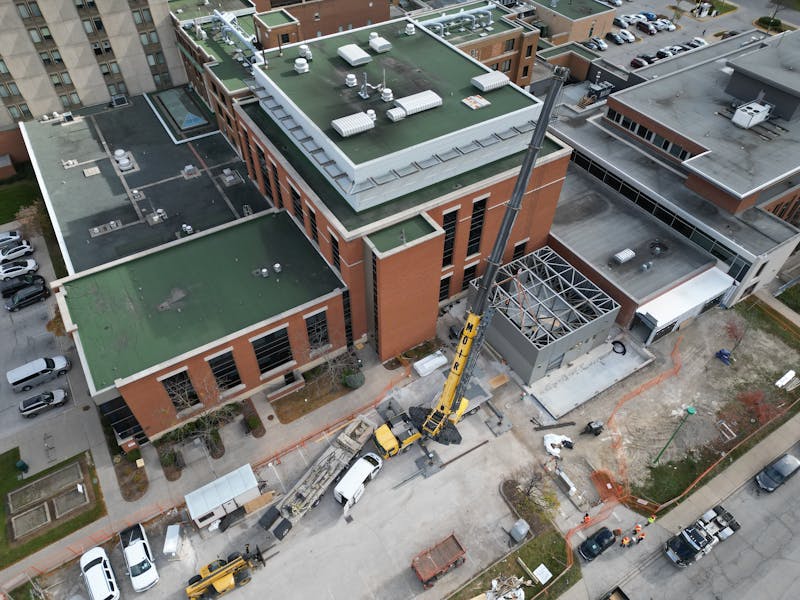
Hospitals expanding capacity face a familiar bind: clinical demand will not wait for a multi-year construction timeline. RAD Technology Medical Systems has spent decades building Modular Medical Facilities (MMF) that integrate seamlessly with existing hospital campuses.
Our modular technology delivers code-compliant clinical space in weeks rather than years, with minimal disruption to active patient care.
In this blog, we will discuss how modular buildings integrate with existing hospital infrastructure, the planning steps that ensure successful tie-ins, and the operational gains hospitals achieve when they go modular.
Why Hospitals Choose Modular Construction for Expansion
Healthcare systems are under sustained pressure to expand faster than traditional construction can accommodate. The American Hospital Association reports that workforce shortages, demand surges, and aging infrastructure are pushing hospitals to rethink how they deliver new clinical space. Modular Medical Facilities (MMF) offer a proven approach that integrates directly with existing campuses.
Hospitals turn to modular construction for several reasons:
- Building systems: Fire alarm and HVAC controls (BAS/BMS) are typically integrated with the hospital's existing systems.
- IT and telecommunications: Network, telephone, and EMR/imaging systems align with the hospital's existing infrastructure.
- Radiation shielding: Linear accelerator vaults are designed to meet applicable NCRP shielding standards.
- Patient flow: Connecting corridors and shared waiting areas help maintain a seamless patient experience.
How Modular Buildings Connect to Existing Hospital Infrastructure
Successful integration depends on tying the new facility into the host hospital's clinical, mechanical, and digital backbone. RAD designs each MMF to interface with the host campus from day one, whether the project is adjacent to the main building or connected via a dedicated corridor.
Common integration points include:
- Mechanical systems: HVAC, medical gas, and chilled water lines tie into central plants.
- Radiation shielding: Linear accelerator vaults meet NCRP shielding standards.
- IT and EMR: Network and imaging systems align with the hospital's existing architecture.
- Patient flow: Connecting corridors and shared waiting areas preserves a unified patient experience.
Planning a Successful Modular Integration
Strong integration starts long before the first module arrives on site. Site assessment, code review, and stakeholder alignment shape every downstream decision. The Whole Building Design Guide outlines how early coordination between architects, engineers, and operators reduces rework and accelerates commissioning.
Planning priorities for hospital leaders include:
- Site survey: Geotechnical, utility, and access conditions confirm feasibility.
- Code compliance: Projects meet state and local standards.
- Stakeholder input: Clinicians, facilities staff, and IT teams weigh in on workflow and adjacency.
- Schedule alignment: Module fabrication runs parallel to site preparation to compress timelines.
Maintaining Patient Care During Construction
Active hospitals cannot pause operations for a build. Infection control, noise, and traffic must stay within strict limits. The CDC publishes guidance on construction-related infection risk that informs every responsible healthcare project, modular or traditional.
Practical safeguards on RAD projects include:
- ICRA protocols: Infection Control Risk Assessment guides barriers, filtration, and traffic.
- Off-site fabrication: Most construction takes place at a controlled facility, not the hospital campus.
- Phased tie-ins: Utility and corridor connections occur during low-census windows.
- Dust and noise containment: Negative-pressure barriers protect adjacent clinical areas.
Long-Term Flexibility for Evolving Service Lines
Medical technology keeps moving. A vault built for today's linear accelerator may need to house a different system in ten years. Modular construction is purpose-built for that kind of change. The Agency for Healthcare Research and Quality tracks how facility design influences care delivery, and adaptability remains a recurring theme.
RAD facilities offer:
- Expandability: Additional modules attach to existing facilities without full rebuilds.
- Upgradability: Modules can be added, removed, or swapped as needs change, allowing the facility to adapt to new equipment and evolving clinical workflows.
- Relocatability: Crews can move entire facilities to serve a different campus.
- Removability: Temporary buildings clear out cleanly once permanent space comes online.
Modular Integration, Backed by Two Decades of Healthcare Experience
Integrating a modular building with a working hospital campus is not a generic construction problem. It is a clinical, mechanical, regulatory, and human-systems challenge that RAD has solved at institutions such as the University of Michigan Medical Center, Adventist Health Glendale, and Flagler Hospital.
Ready to expand your clinical capacity without disrupting patient care? Contact RAD Technology Medical Systems today to speak with one of our modular construction experts and start mapping the right integration plan for your hospital.