
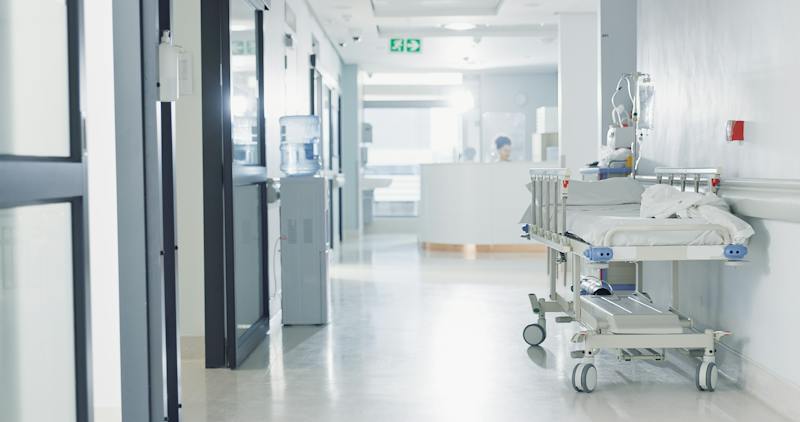
The fastest path to a new emergency room through traditional construction still takes years, and that timeline carries a cost for every month. Hospitals under emergency volume pressure can't pause patient arrivals while permits clear and foundations get poured. By the time a conventional build wraps, the gap between when the capacity was needed and when it arrived has been open for the entire duration.
RAD Technology Medical Systems has been solving this problem for healthcare organizations for more than two decades. Their modular emergency care facilities are code-compliant and purpose-built for clinical performance, consistently opening months ahead of what traditional construction delivers. Read on to see how the approach works and what it means for a hospital that can't afford to wait.
When Emergency Departments Hit Their Limit
When an emergency department runs beyond capacity, the effects spread across the entire organization and accumulate quickly. The consequences reach well beyond the waiting room:
- Diverted patients take revenue to competing facilities and disrupt the community's continuity of care
- Longer wait times in crowded spaces increase clinical risk and reduce care quality
- Staff working in undersized or poorly designed environments face higher rates of burnout
- Repeated diversion erodes the community trust hospitals depend on for long-term viability
A department at capacity today won't see new conventional construction finished for years. Meanwhile, patient volumes keep climbing. That's the core problem.
How RAD Cuts Months Off the Construction Timeline
RAD runs construction on two tracks at once. Foundation and utility work proceeds on-site while modules are fabricated in a factory, a process that can cut total project timelines by up to 50% compared to traditional builds. The schedule shortens because both tracks run in parallel, with quality and code compliance maintained throughout. For a hospital that needs capacity now, those months translate into earlier treatment availability and real revenue that a conventional timeline simply delays.
Modules arrive on-site approximately 80% complete, with utilities, cabinetry, and finishes pre-installed in a controlled factory environment. That means less disruption to existing hospital operations during construction and a faster path to clinical use.
Designed for the Demands of Emergency Medicine
RAD's emergency care facilities are purpose-built for the specific pressures of emergency medicine, where layout decisions directly affect patient outcomes. Floor plans are configured from the outset for efficient patient flow, triage, and infection control.
Each facility is fully customized to the organization's program: treatment rooms, triage areas, support spaces, and the medical equipment to run them. Buildings can connect directly to existing hospital infrastructure or operate as standalone structures. Temporary configurations serve disaster response and active renovation periods. Permanent facilities match or exceed traditional construction standards in durability and long-term function.
For organizations without available capital, RAD's operating lease model removes that barrier. Lease payments stay off the capital budget, and hospitals bypass the procurement process that routinely delays projects by months before construction even begins. For many healthcare organizations, that financing flexibility is what makes the timeline advantage fully reachable.
RAD Technology Medical Systems: The Faster Route to Emergency Care Capacity
Hospitals facing emergency capacity problems cannot wait years for conventional construction to catch up. RAD Technology delivers code-compliant modular emergency care facilities that open months ahead of traditional timelines, with financing that requires no upfront capital. If your emergency department is under pressure, contact RAD Technology to find out what a modular solution looks like for your facility.
This information is provided for educational purposes only and does not replace consultation with a qualified healthcare facility planning professional. Outcomes, timelines, and suitability vary based on project size, site conditions, and regulatory requirements.